Bulging and whitening of a fish's eye can be changes in different parts of the eye with different causes. Popeye (exophthalmia) describes the eyeball or surrounding tissue protruding outward; with cloudiness, you need to work out whether it's on the surface, in the cornea, or inside the eye, in the lens. First record whether one or both eyes are affected, how quickly it happened and any other signs, then arrange an examination; don't use the same medication for every eye problem.[1]
First separate the fish's normal look from new changes
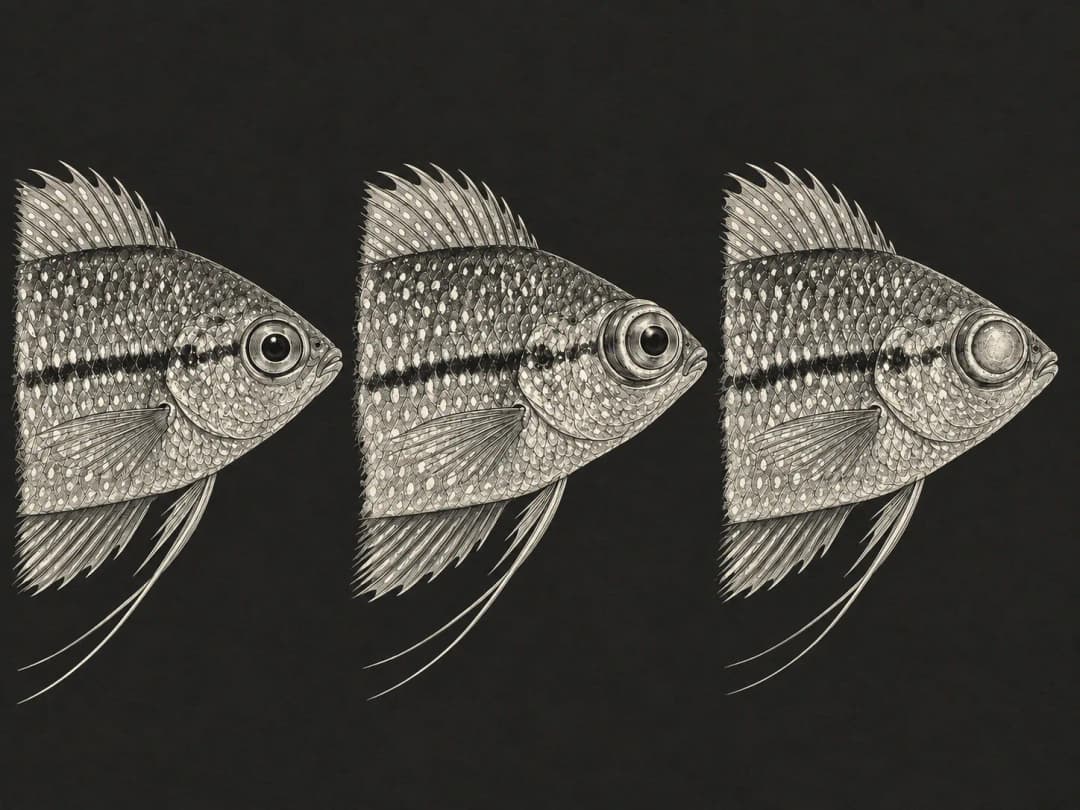
In some breeds (such as certain goldfish varieties) the eyes naturally protrude more, so compare with earlier photos of the same fish and between its left and right sides. If an eye suddenly looks more swollen than usual, is damaged, or the fish also becomes less lively, it needs further assessment.
Take photos from the front and both sides, and note whether the cloudiness is a surface layer or deeper white spots or white areas. Photos only provide clues and can't reliably replace an eye examination; avoid repeatedly catching the fish, prying at the eye or pressing on the eyeball.
What one eye versus both eyes can tell you
Recent transport, chasing and nipping, or collisions make a local injury an important possibility to rule out. When both eyes, or several fish, are affected at the same time, also check water quality, exposures and systemic disease. But one eye doesn't necessarily mean injury, and both eyes don't necessarily mean infection.
| Appearance to record | What to clarify during examination |
|---|---|
| One side swollen, bleeding or with surface damage | Injury, local infection or other lesions. |
| Popeye in both eyes with bloating, wasting or ulcers | Needs assessment for systemic disease. |
| Surface cloudiness or tiny bubbles | Corneal changes, chemical irritation, gas bubble–related lesions. |
| Persistent cloudiness deeper inside the eye | Lens opacity and other internal eye conditions. |
Bleeding in a fish's eye can be linked to injury or infection, and wild-caught fish may also have eye parasites. Tiny bubbles in the cornea may suggest gas bubble disease, which needs to be confirmed by a veterinarian; lens opacity is an internal eye condition and is assessed differently from a surface wound.[1]
Normal water test results don't mean you can skip an eye exam
First check water temperature, pH, ammonia, nitrite and equipment. If the problem started right after a water change or adding medication, look more closely at new water and chemical exposure. Chronic irritation from chlorine can cause corneal cloudiness and other abnormalities of the gills and skin.[2]
Environmental testing and an eye exam answer different questions. Even if the water tests normal right now, earlier exposure or infection can't be ruled out; if the fish also shows wasting, bloating, red patches, or deaths are increasing, a veterinarian may need to examine the internal organs and look for pathogens.[2][3]
A cataract isn't a surface infection
A cataract is clouding of the lens and can be linked to parasites such as eye flukes, nutritional deficiencies or causes that haven't been identified. Whitening alone can't pinpoint the cause, and you can't assume ordinary medication will make the lens clear again.[1]
If the fish's vision is affected, you can support it by feeding in the same spot, reducing competition for food and avoiding drastic changes to the setup, and watching whether it can find food without trouble. These adjustments are supportive care; the cause still needs to be determined by a veterinarian.
How to prevent further damage
Check for sharp decor, narrow gaps where fish can get stuck and aggression from tankmates, and reduce moving and netting. If isolation is needed, prepare a system with stable water quality and good aeration first, so you don't increase ammonia exposure in a small, uncycled tank.
Don't puncture a bulging eye, squeeze the eyeball or wipe the cloudy area yourself, and don't use human eye drops. If antibacterial or other treatment is needed, base it on the confirmed cause, legally appropriate medications and your veterinarian's instructions.
When to get veterinary help quickly
Seek help quickly if there's sudden swelling, obvious bleeding or an open wound, or if it comes with rapid breathing, loss of balance, refusal to eat, or other fish falling ill one after another. Providing photos, a timeline, water test results and a complete medication history helps arrange the right tests.[4]
Frequently asked questions
Only one eye is swollen. Can I leave it for now?
First look back for injury and aggression, and keep monitoring. If the swelling persists or gets worse, the surface is damaged or it affects feeding, the fish needs to be examined; you can't assume it will recover on its own just because only one eye is affected.
Does a cloudy eye always mean blindness?
Not necessarily. Vision and outlook vary with where the cloudiness is, the cause and how much damage there is, so first distinguish corneal changes from lens changes. Cataracts have no general treatment other than surgery, and whether treatment is appropriate needs to be decided by a veterinarian.[1]
Is all popeye contagious?
No. Popeye is a sign, and whether tankmates need to be managed depends on the confirmed cause.
Further reading
- What to Do When Your Fish Is Sick – Reading Aquarium Fish Symptoms and What to Do First
- Causes of Dropsy and Raised Scales in Fish – How to Assess a Swollen Belly and Pinecone Scales
- Red Patches, Bleeding and Ulcers on Fish – Telling Injury from Bacterial Infection
- Fish Gasping or Dying After a Water Change – Tracking Down Chlorine, Chloramine and Water Quality Changes
- Wart-Like Growths on Fish – How Lymphocystis Disease Differs from Ich
References
- Francis-Floyd R, Petty BD. Disorders and Diseases of Fish. Merck Veterinary Manual, revised 2020.
- Francis-Floyd R, Yanong RPE, Petty BD. Environmental Diseases of Aquatic Animals in Aquatic Systems. Merck Veterinary Manual, revised 2023.
- Petty BD, Francis-Floyd R, Yanong RPE. Bacterial Diseases of Fish. Merck Veterinary Manual, revised 2022.
- Stilwell NK, Yanong RPE, Francis-Floyd R. Submission of Fish for Diagnostic Evaluation. UF/IFAS, FA055, 2001 (revised 2025).