
When red patches, congested fin bases or missing patches of skin appear on a fish, check for injury, aggression from tankmates, water quality and parasites first, then assess for bacterial infection. An ulcer is a sign of tissue damage; it doesn't confirm a particular bacterium, and septicemia can't be diagnosed from appearance alone.[1][2]
How red patches, bleeding and ulcers differ
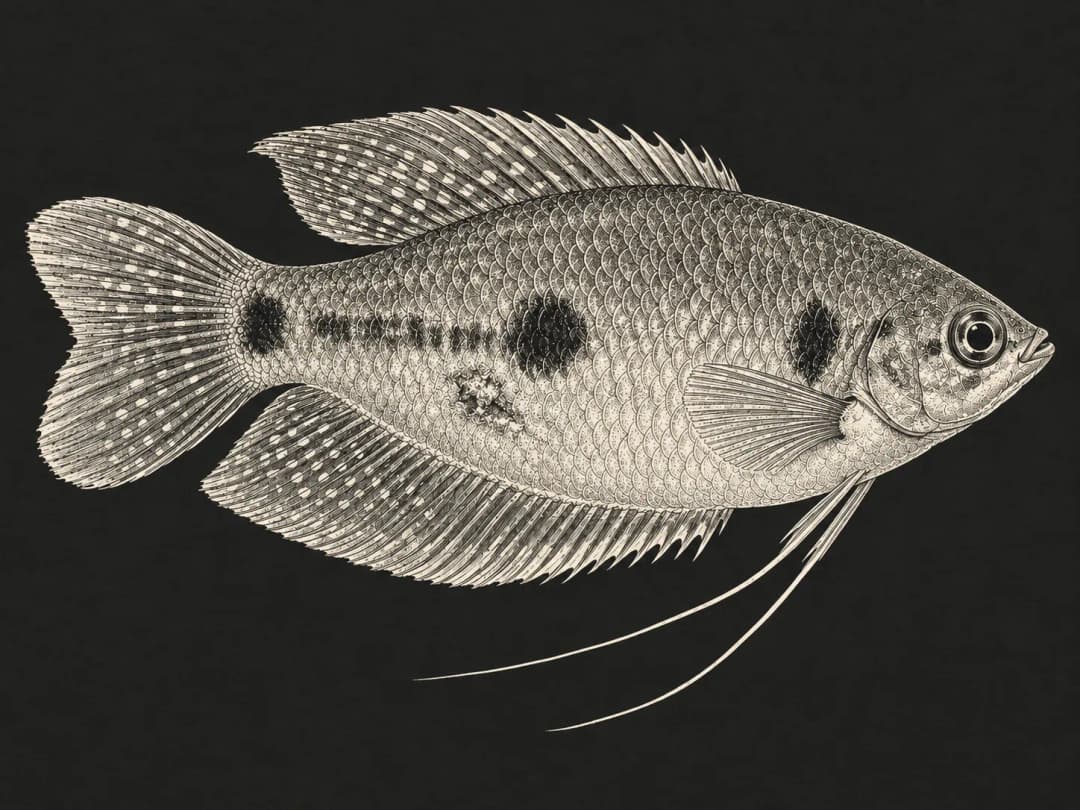
Red patches describe local reddening, bleeding means blood outside the blood vessels, and an ulcer involves loss of surface tissue. Photos help with tracking, but the fish's base color, lighting and camera angle all affect how they're read, and a veterinarian also needs the history and test results.
Record where the lesion is, its size and its edges, watch whether it grows or exposes deeper tissue, and keep an eye on appetite, breathing, the belly and swimming. Daily photos from a fixed angle are better for tracking than repeatedly catching the fish to look.
Injury and infection can occur together
Collisions, rough decor, transport and bites from tankmates are all worth looking back on. A clear recent injury doesn't mean you can simply wait; damaged tissue can become a site for secondary infection.[3]
If a lesion keeps growing, several fish develop similar wounds one after another, or there's refusal to eat, bloating or rising deaths, send samples for testing sooner. Even a single affected fish may need treatment; severity can't be judged by the number of sick fish alone.
Which bacteria need to be considered
Aeromonas and Pseudomonas are groups to consider in infections of freshwater fish, while some problems in marine fish may involve groups such as Vibrio. Different pathogens can cause overlapping signs of bleeding and ulceration.[1]
Columnaris can also damage the skin, fins and gills.[1][5] Water mold can form cotton-like growth on damaged areas.[3] When signs look alike or occur together, microscopy, bacterial culture or histopathology should be used together; not every case of "rotting flesh" can be put down to the same disease.[1][2]
Which husbandry conditions to check first
| What to check | Information the keeper can provide |
|---|---|
| Water quality and equipment | Records of temperature, pH, ammonia, nitrite, aeration and filter operation. |
| Injury and aggression | When decor was changed, chasing, transport, when new fish were added. |
| Lesion progression | Date first noticed, lesion photos, number of fish affected and dead. |
| Treatment so far | Medication name, active ingredient, dose, when it was used and how the fish responded. |
Low dissolved oxygen, water quality problems and handling stress can increase the risk of bacterial disease. Removing uneaten food, confirming aeration and making appropriate improvements to the environment should go hand in hand with diagnosis; medication can't replace good husbandry.[1][2][3]
Why culture and antibiotic sensitivity testing are needed
Bacterial culture can help identify the pathogen, and antibiotic sensitivity testing provides a basis for choosing a drug. The sampling site and timing matter: diagnostic staff should choose infected tissue to sample and interpret the results, and culture results from fish that have already been medicated are often less useful.[1][2]
If the fish's condition allows, discuss sampling with your veterinarian before starting antibacterial treatment, and if you've already medicated, provide an accurate record. For fish that are deteriorating quickly, whether to treat first and how to sample is the veterinarian's call; necessary treatment shouldn't be delayed while waiting for test results.
Antibiotics only work against susceptible bacteria; they can't solve parasites, viruses or environmental poisoning. Repeatedly switching drugs, not finishing a course, or the affected fish not actually receiving enough of the drug can all lead to treatment failure.[2]
Keep caring for the original tank after isolation
An isolation tank needs stable filtration and aeration, and netting injuries should be kept to a minimum. Keep tracking lesions, appetite and water quality in the other fish in the original tank; don't assume that removing the sick fish has removed every risk.
Quarantining new fish first, avoiding overcrowding, and keeping nutrition and hygiene appropriate are better day-to-day management than routinely adding antibiotics.[1][3]
Frequently asked questions
Are red patches always contagious?
Not necessarily. Injury and environmental irritation can cause local changes, and how an infection spreads depends on the pathogen, so the cause needs to be confirmed first.
If white fuzz grows on a wound, should I only treat for water mold?
You should also look for the original wound and any other infection. The growth may be a secondary problem and can't replace examining the whole course of the illness.[3]
When shouldn't I keep waiting?
If a wound is spreading quickly, the fish is breathing rapidly or clearly losing its balance, or tankmates are dying one after another, contact an aquarium fish veterinarian as soon as possible and send samples as instructed.[4]
Further reading
- What to Do When Your Fish Is Sick – Reading Aquarium Fish Symptoms and What to Do First
- Columnaris Disease Symptoms – Recognizing Rotting Gills and Fins and Cottony Growth on the Mouth
- Is White Fuzz on Your Fish Water Mold? – Wound Infections and Why Fish Eggs Grow Fuzz
References
- Petty BD, Francis-Floyd R, Yanong RPE. Bacterial Diseases of Fish. Merck Veterinary Manual, revised 2022.
- Yanong RPE. Use of Antibiotics in Ornamental Fish Aquaculture. UF/IFAS, FA084, 2003 (revised 2025).
- Francis-Floyd R, Stilwell NK, Yanong RPE. Introduction to Fish Health Management. UF/IFAS, CIR921/FA004, 1990 (revised 2025).
- Stilwell NK, Yanong RPE, Francis-Floyd R. Submission of Fish for Diagnostic Evaluation. UF/IFAS, FA055, 2001 (revised 2025).
- Declercq AM et al. Columnaris disease in fish a review with emphasis on bacterium-host interactions. Veterinary Research 44, 27, 2013. doi:10.1186/1297-9716-44-27.