
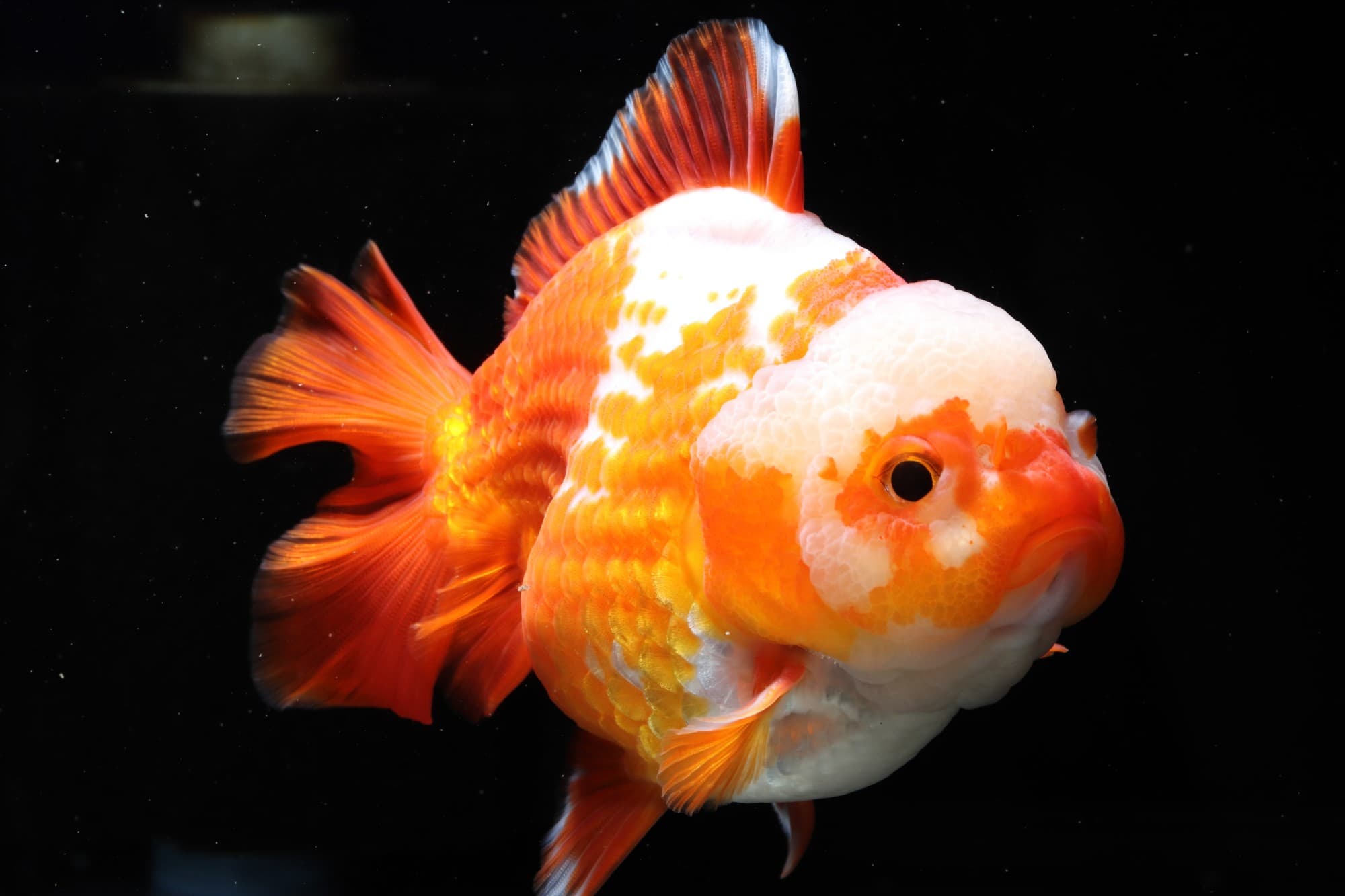
Keeping goldfish well depends on suitable space, established filtration and a feeding amount you can control. Fancy goldfish such as ranchu, ryukin and lionheads differ in swimming ability and how quickly they get to food, so the tank, tankmates and food all need to be planned together. This guide focuses on healthy fancy goldfish kept indoors; more active single-tailed varieties such as wakin and shubunkin need considerably more space.[1][2]
Goldfish care at a glance
| Item | Everyday planning |
|---|---|
| Water temperature | Healthy fancy goldfish can be planned around a stable 20 to 23°C; this is where the ranges recommended by two guidelines overlap, not the single best value for every variety.[1][2] |
| pH | About 6.5 to 8.5; keep it stable first and avoid quick adjustments to chase a single number.[2] |
| Ammonia and nitrite | In an established tank, the management target is undetectable by test kit.[2] |
| Tank | Plan a rectangular tank around adult size and number of fish, with room to turn, swim and take cover. |
| Feeding adults | One meal a day is a conservative starting point; the same daily total can also be split into 2 meals. |
| Routine maintenance | Test the water weekly and do partial water changes; adjust the volume changed to how quickly waste accumulates. |
A goldfish tank needs both swimming space and cover
RSPCA recommends at least 50 liters, with tank length, width and height of at least 4, 2 and 3 times the adult fish's body length respectively. These conditions must be considered together; 50 liters is not enough for any and every goldfish. In practice, you can allow about 80 to 100 liters or more for one small to medium fancy goldfish. This is a planning suggestion to give you more margin for management, and the tank will still need upgrading as the fish grow and their numbers increase.[1]
Filtration needs to both trap solids and provide biological treatment, and the outlet should stir the surface without constantly pushing the fish around. Keep an open swimming area free of sharp corners, and use safe plants or smooth decor to provide cover. A bare-bottom tank is easy to clean but still needs some cover; if you use substrate, you need to be able to siphon waste out of it. Varieties with limited vision or swimming ability, such as telescope eyes, especially need you to avoid sharp edges and holes where their bodies could get stuck.[1]
Place the tank out of direct sunlight in a spot where the temperature stays fairly stable, use lights on a timer and keep nights dark. When summer heat pushes the water temperature up, first cut down indoor heat sources and increase ventilation and surface agitation; don't add ice directly and create a rapid temperature swing. Establish biological filtration in a new tank first, then add fish gradually; a filter that has run for a few days doesn't mean the tank has finished cycling.[3]
How often to feed goldfish, and how much each time
For a typical healthy adult, one small meal of a staple food a day is an easy starting point; if you split it into morning and evening meals, you are dividing the same daily total. Growing juveniles can have smaller, more frequent meals, but only once you have confirmed what is actually eaten at each meal and what the water quality can handle. Constantly rooting along the bottom or begging for food doesn't mean they need more meals.[2][4]
When switching to a new food for the first time, drop in a small portion, watch what is actually eaten over about 1 to 2 minutes, then stop feeding and remove the leftovers. Note how much went in, how much was left and whether every fish got some. Say a tank in good condition actually finishes 12 pieces a day: if you switch to two meals, you could start with 6 and 6. This is only an example of splitting meals; 12 pieces is not a universal feeding amount. Take photos from the same angle each week to compare belly profile, activity and waste, then fine-tune the daily total.[1][4]
If you have a reliable body weight for your fish, UF IFAS gives a reference of about 0.5 to 1% of body weight in dry food per day for maintaining typical adult fish. It can serve as a rough check, but can't be used directly as a standard prescription for all goldfish, juveniles or cool-water conditions. If water changes are falling short, cutting food heavily over the long term won't solve it on its own; space and maintenance need to improve as well.[4]
How to choose goldfish food
Choose a staple made for goldfish that they can eat easily and that makes portions easy to control. Slow-sinking or sinking foods can help some fancy goldfish spend less time competing for food at the surface, but they can't guarantee that buoyancy problems won't occur. Frozen foods or suitable vegetables used as small substitutions also count toward the day's feeding amount.[2]
APEX GOLDFISH can be one of your everyday staple options; what matters is that the fish can actually eat it, every fish gets some, and leftovers can be removed. "All-season" describes how the product is positioned. You still need to adjust feeding when air temperature, water temperature or the fish's condition changes, rather than feeding the same amount all year round.[5]
Daily and weekly goldfish tank maintenance
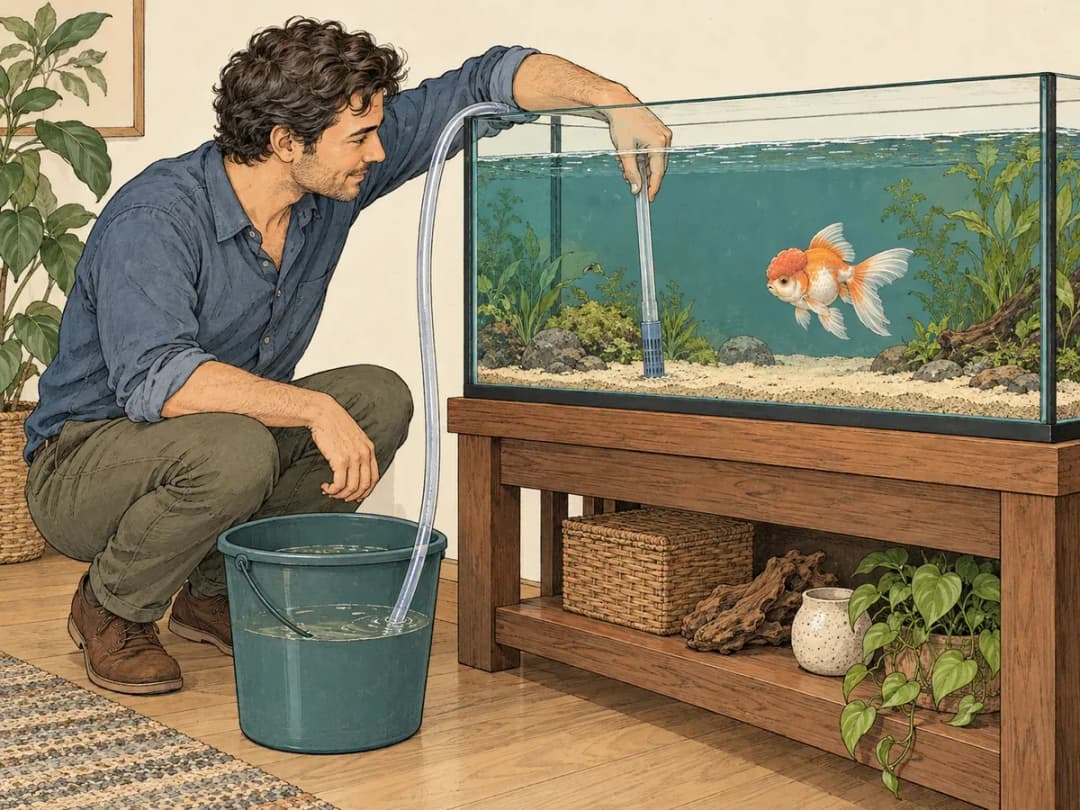
Every day, check water temperature, filter output, feeding and how the fish are holding themselves, and remove leftover food promptly.
Test ammonia, nitrite, nitrate and pH weekly, along with bottom siphoning and partial water changes. The 10 to 25% a week recommended by the sources is a routine starting point; if pollution rises, change water more often or increase the percentage as appropriate.[1][6]
Treat new water for chlorine and chloramine first, and make sure its temperature is close to the tank's. Simply letting tap water stand can't be relied on to remove chloramine.[1]
When filter flow drops, clean the mechanical media; rinse biological media gently in removed tank water or dechlorinated water, and avoid replacing all of it at once.[1]
Observing your fish starts with knowing what normal looks like
Judging health means looking at trends: whether the fish swims in balance, breathes steadily and eats consistently, and whether there are new wounds on the skin or fins. If a fish keeps gasping at the surface, clamps its fins, lies on its side, flips upside down, has an unusually swollen belly or raised scales, first test the water, check oxygen and filtration, then contact a fish veterinarian. Outward symptoms aren't the same as the cause, and floating upside down can't automatically be diagnosed as swim bladder disease.[2]
Keep photos of each fish along with recent water-quality records, food and feeding amounts. When something seems wrong, a short video helps an assessment far more than just saying the fish is "not very active." With acute breathing problems, though, don't delay dealing with it just to film first.
Goldfish care FAQ
Can goldfish live in a small round bowl?
A small fishbowl usually can't accommodate a mature goldfish, a filter and enough swimming space. A rectangular tank planned around adult size makes it easier to keep conditions stable.[1]
My goldfish keep begging. Can I keep feeding them?
Better not. Adjust based on a set daily total, body condition and water-quality records; how eagerly they beg for food can't tell you how much they need.[2]
Do I need to take all the fish out to change the water?
For routine bottom siphoning and partial water changes, the fish can usually stay in the tank; work slowly and keep clear of them. Resetting the whole tank and repeatedly netting the fish shouldn't become a routine.[1]