
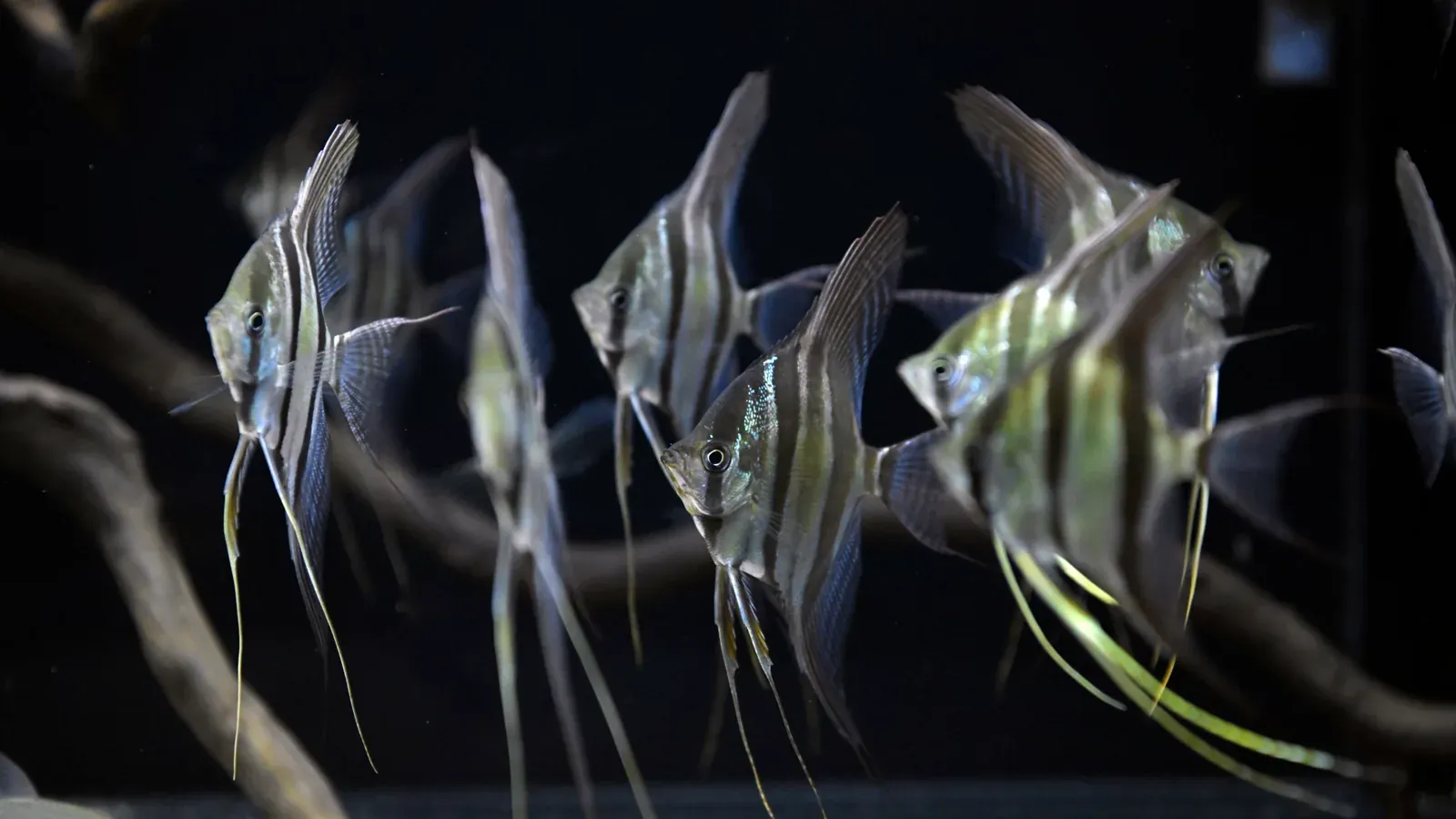
Keeping altum angelfish starts with the fish's source, the space available and a stable system. Swimming space suited to a tall-bodied fish, water quality you can track and a feeding plan that makes sure every fish gets to eat all shape long-term care. This article brings together keeping experience from books and aquarium health management resources to help you build a daily routine you can keep up.
Confirm the species and source first, and observe new fish separately
In this article, altum angelfish refers to Pterophyllum altum. Current fish taxonomy resources list it as a valid species, found in the Orinoco River basin of Colombia and Venezuela in South America. Trade names don't indicate origin (in Chinese-speaking markets it's even sold as the "Egyptian angelfish"), and a sales name can't stand in for the scientific name and source records. When buying, ask whether the fish is wild-caught or captive-bred, when it was acquired, what it has been eating, and the water temperature and water quality the supplier actually keeps it in.[1]
Observe new fish in a system you can manage separately, with tools kept apart from your existing tanks. Record changes in feeding, breathing, swimming posture, injuries and waste before deciding whether to combine them later. Quarantine length and any necessary examinations should be based on the source, the risk and professional advice; a fixed number of days isn't a guarantee of safety, and repeated preventive medication isn't a substitute for observation.[3][4]
Leave swimming room for extended fins and space for maintenance
When choosing a tank, consider water depth, front-to-back width, length and the fish's adult size together. Effective water depth is the distance from the actual water surface down to the bottom the fish can use, minus what the substrate and decor take up; the height printed on the tank can't be taken as the swimming space. Let the dorsal, anal and pelvic fin filaments extend naturally so the fish don't keep brushing against the glass or equipment when they turn, and leave room for group interaction and for splitting into separate tanks later. The large breeding tanks in the book are individual setups and can't be used to set a single minimum size for every home tank.[2]
Use safe driftwood or tall plants to provide cover and break up lines of sight, while keeping open swimming space and room to siphon. The blackwater and flooded vegetation of their native habitat can inform how you set up the tank, but darker water doesn't mean you've recreated native water chemistry. Secure driftwood firmly and avoid sharp edges; fit intakes with guards suited to the size of the fish, and aim for flow that keeps water circulating without forcing the fish to swim against the current constantly. Before mixing with other species, also assess chasing, mouth size and competition for food.[2][7]
Measure water temperature and quality before adjusting
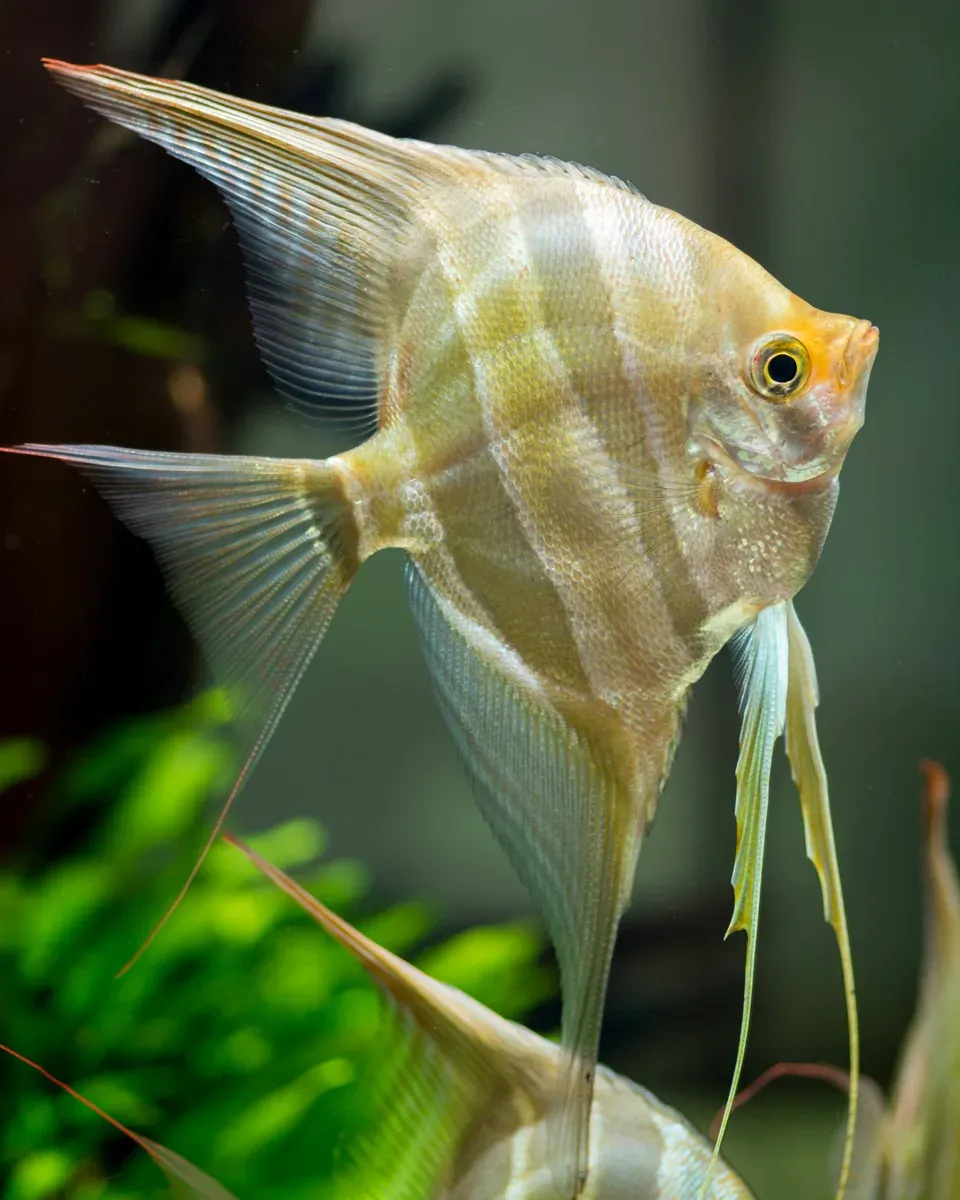
Keeping experience in Linke's book lists a water temperature of 27–29°C and pH 5.5–6.5, which can serve as a reference for reading and management; these aren't shared optimal values for every source, age and system. For fish already feeding steadily under the supplier's conditions, confirm how they're currently adapted before evaluating any change. When indoor air conditioning switches on or off, temperatures drop at night, or you change water, measure the actual water temperature rather than relying on the heater setting.[2]
| Parameter | What to interpret and record |
|---|---|
| pH | Acid-base status; note when you measured, and if using an electrode, calibrate and maintain it according to the manufacturer's instructions. |
| GH | Mainly reflects total hardness from calcium and magnesium; a TDS reading can't substitute for it. |
| KH/alkalinity | Aquarium KH test kits are usually used to estimate acid-neutralizing and buffering capacity; water with low buffering needs closer tracking of pH changes. |
| EC/TDS | EC is electrical conductivity; on some meters, TDS is estimated by multiplying EC by a factor. Record the units, mode and conversion factor. |
| Ammonia, nitrite and nitrate | Test nitrogenous wastes separately to assess biological filtration, feeding load and water-change planning. |
The same EC or TDS doesn't prove the same ionic composition, and GH can't be calculated from it in place of an actual GH measurement. Compare source water, the new water you're preparing to add and tank water, and keep note of the instrument and units so you can track trends; don't use strong acids to make rapid adjustments in pursuit of a single low pH value.[5][6][7][8]
Adjust feeding frequency and portions based on what fish actually swallow
For subadults and adults already adapted to prepared foods, you can plan meals according to the label of the product you've chosen. Ultra Fresh TROPICAL excellent bits are designed to sink slowly; the published feeding recommendation is 2–3 times a day, with each feeding about the amount the fish can finish within 3 minutes. That's this product's starting point; in practice you still need to adjust for mouth size, body condition and water quality, and it can't be applied directly to fry that have just started feeding.[9]
Offer a small portion first, and add more only once you see the fish actually swallowing; when feeding slows, fish spit out food repeatedly, or food settles without being eaten, stop and remove the leftovers. Three minutes is a guide for observation, not a requirement to keep feeding for a full three minutes. Check one by one that smaller fish or fish being chased also get to eat, spreading out feeding spots if needed while keeping the total for the tank under control. Even if the fish eat everything, their metabolism still adds nitrogenous waste, so "no leftovers" isn't the only basis for feeding more.[10]
When switching a new fish to a different food, first confirm the environment and its health, offer a small trial amount during its usual feeding times, then adjust gradually based on acceptance. With live or frozen foods, manage the source, storage and cleanliness; keep dry foods dry, use them before the expiration date, and don't let wet utensils touch the whole container of food. If persistent refusal to eat comes with gasping, loss of balance or weight loss, test the water first and arrange a health assessment.[3][11]
Plan water changes and filtration around the load
Each day, check water temperature, filter output, oxygenation and how the fish are responding, and remove obvious leftovers, feces and decaying leaves. The management goal for ammonia and nitrite is levels undetectable with reliable test kits; ammonia toxicity is also affected by pH and temperature, and clear water or a lack of odor can't replace testing. You can put weekly testing on a fixed schedule, and test more often for new tanks, increased feeding, tank splits or when something seems wrong.[10]
Linke's record of changing about 20–25% of the water every 8–10 days reflects a specific keeping arrangement and can serve as a starting point for comparison. Actual frequency should be adjusted for density, nitrate trends, pH changes and waste buildup. Before a water change, treat chlorine and chloramine as directed on your dechlorinator label, and check differences in temperature and water quality between the new water and tank water; if maintenance has long been neglected, measure first, then plan improvements you can control.[2][10][11]
Mechanical filtration traps particulate waste and should be cleaned as it clogs; biological filtration provides an environment where microbes process nitrogenous waste. Maintain them in stages according to the equipment instructions, and avoid thoroughly disinfecting all biological media at once. Nitrification converts ammonia to nitrite and then to nitrate; it doesn't make nitrogenous waste disappear, so filtration and water changes still need to work together.[7][10]
Use daily observation to spot changes that need attention
At similar times of day, observe breathing, swimming posture, fin extension, feeding and group interaction, and note which fish are being chased, can't get to food or keep hiding in a corner. Look at changes in appearance together with timing, water quality and your maintenance records; body color, fin filaments or a single photo alone can't confirm the cause of an illness. If something abnormal happens suddenly, check equipment and water quality right away; if things keep getting worse, fish keep dying or there are obvious injuries, provide videos and records to an aquatic animal veterinarian.[11]
Frequently asked questions
Do altum angelfish have to be kept at a very low pH?
Start with the fish's source, what it's already adapted to and how stable your system is. Low pH readings from the wild or from breeding cases can't be taken directly as the target for all everyday keeping; before adjusting, check your measurements and buffering capacity.
Can cleaner fish or high-flow filtration replace water changes?
Tankmates also produce waste, and high flow doesn't mean all dissolved substances have been removed. Siphoning, testing for nitrogenous waste and necessary partial water changes are still needed.
Does feeding two to three times a day also apply to fry that have just started feeding?
Fry differ in mouth size, food acceptance and rearing load, so plan separately based on their development and feeding response. Continue with the fry-rearing article in this series.
Further reading
References
- Eschmeyer’s Catalog of Fishes — Pterophyllum altum, updated 2026-08-13
- Horst Linke (2018), A New World of Angelfish: Notes on Breeding the Altum Angelfish (Chinese edition), translated by Matilde Chen, Fish Magazine, print pp. 10–21, 118–128, 126–194 and 196–210; keeping temperature and pH reference on p. 188.
- UF/IFAS — Fish Health Management Considerations in Recirculating Aquaculture Systems Part 2 Pathogens
- Merck Veterinary Manual — Routine Health Care of Fish, updated 2026
- USGS — Hardness of Water
- Hanna Instruments — What is the relationship between TDS and EC
- UF/IFAS — Fish Health Management Considerations in Recirculating Aquaculture Systems Part 1
- Hanna Instruments — Why do my pH readings keep drifting
- Ultra Fresh TROPICAL excellent bits product information
- UF/IFAS — Ammonia in Aquatic Systems
- Merck Veterinary Manual — Management of Aquarium Fish, updated 2026