
A clearly swollen abdomen with outward-raised scales means the fish's fluid balance and internal organs need to be checked. Dropsy and raised scales are clinical signs and don't point to a single pathogen; abdominal swelling that looks very similar can also come from eggs, organs or masses.[1]
What to do first when you see dropsy or raised scales
Measure water temperature, pH, ammonia and nitrite, and check aeration and filtration. Note whether one or several fish are affected, along with any recent water changes, transport, new fish or changes in feeding. Take photos from the side and from above, and watch whether the swelling is asymmetrical, keeps growing or comes with bulging eyes.
If abdominal swelling comes with raised scales, refusal to eat, rapid breathing, bleeding or ulcers, consult a veterinarian as soon as possible. Don't puncture or squeeze the abdomen yourself, and don't choose an antibiotic based on the word "dropsy" alone.
What dropsy and raised scales each mean
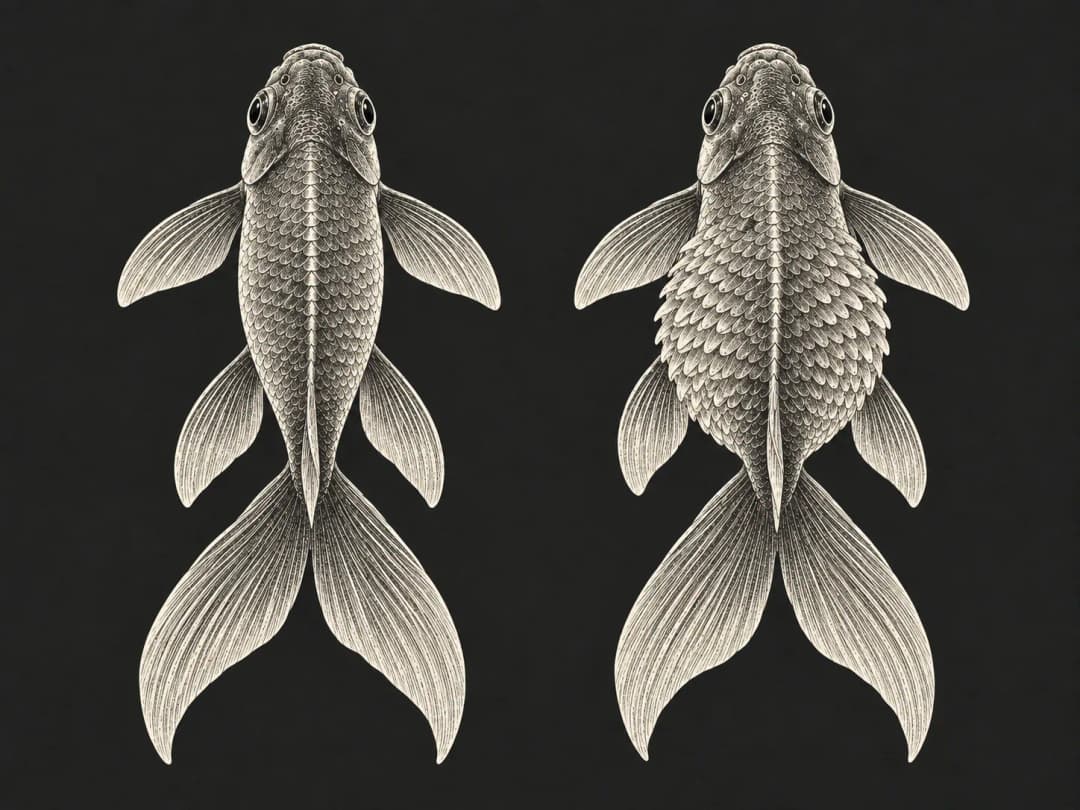
Ascites means excess fluid in the body cavity. The English term dropsy is used inconsistently in the literature: some sources use it for a body cavity distended by ascites, others for edema of the scale pockets that makes the scales stand out, so not every case described as dropsy should be equated with simple fluid in the abdominal cavity.[1][3]
Raised scales means the scales stand out from the body, often described as a pinecone appearance. Edema in the scale pockets can push the scales outward; it's a clue to a fluid imbalance but doesn't tell us what caused it.[3]
The absence of obvious raised scales doesn't rule out internal disease, especially in scaleless fish, which have no scales to lift and usually won't show it the same way.
Separate true fluid buildup from other causes of abdominal swelling
| Possible direction | Key points to distinguish |
|---|---|
| Bacterial infection or systemic disease | May come with bleeding, ulcers, bulging eyes or organ changes; needs to be combined with culture and other tests. |
| Viruses, parasites or mixed infections | Assess by species, source and course of illness; not every fish with dropsy needs to be tested for the same set of pathogens. |
| Eggs in a mature female, or egg retention | An enlarged belly doesn't mean fluid buildup; normal breeding condition needs to be distinguished from abnormal retention. |
| Tumors, organ enlargement or swim bladder abnormalities | May compress or displace nearby organs, and may also occur together with buoyancy problems. |
| Digestive tract blockage and similar problems | Can also cause swelling; appetite or appearance alone can't tell you. |
Table compiled from a textbook chapter on coelomic disorders and related resources: the bacterial row is based on [1][2], the other rows on [1]. The list shows directions to differentiate and doesn't mean each cause is equally common.
A bacterial culture isn't necessarily the whole answer
Motile Aeromonas bacteria can cause septicemia, abdominal swelling and raised scales, but these bacteria are also widespread in water and around healthy fish, and may be secondary to other infections or environmental problems. A positive bacterial result should be interpreted together with the lesions, sampling site, histopathology and course of illness.[3]
Mycobacteria can cause chronic, variable systemic disease, including weight loss, dropsy and ulcers, and they also carry a risk of infecting people.[2] When the cause is unknown, protect any cuts on your hands when touching tank water or sick fish, and follow your veterinarian's instructions.
The range of possible causes is wider in goldfish and some other species, but appearance isn't enough for a diagnosis, and infection can't be presumed from the season or water temperature alone. Whether to order specific tests is up to the veterinarian based on the risks in each case.
Sudden temperature changes are a risk factor, not a universal cause
Sudden temperature swings, handling and other stressors may increase the risk of certain infections; but once dropsy has developed, simply returning the water temperature to its original value may not address organ damage that has already occurred.[1][3]
Avoid sudden changes in temperature, pH and other conditions during water changes, and also look into ammonia, nitrite, stocking density and other sources of stress. Improving the environment and investigating the cause should happen at the same time.
How a veterinarian may examine the fish
Imaging such as X-rays and ultrasound can help distinguish fluid, eggs, the swim bladder, organs and masses. If needed, fluid, tissue, culture or molecular testing may follow; the combination of tests depends on the fish's size and condition and the diagnostic goal.[1]
The workup can differ between an outbreak in a group and a single pet fish. Provide your records first so the vet can choose the most informative samples; for submitting fish and preparing water samples, see "What to Do When Your Fish Is Sick".
Do raised scales always mean the fish can't be saved?
Raised scales should be treated as a serious sign that needs early assessment, but appearance alone can't be used to declare a fish terminal. The prognosis depends on the underlying cause, the degree of organ damage and the course of illness. Dropsy is a nonspecific clinical sign rather than a specific disease, and the same abdominal swelling can call for different management.[1]
Some chronic or irreversible conditions may have a poorer outcome; and a fish still having an appetite doesn't mean an internal problem can wait. A veterinary exam can help identify factors that can be improved and plan follow-up care.
Frequently asked questions
Does a big belly always mean the fish is eating too much?
No. Eggs, fluid buildup, organ enlargement and tumors can all cause a similar appearance; if the swelling persists or comes with other abnormalities, the fish needs to be examined.[1]
If only one fish has raised scales, does that mean it isn't contagious?
You can't tell from the number of fish affected. Whether one fish or several are affected, the cause can be infectious or noninfectious.
Can I drain the fluid myself or use water additives?
Don't puncture the fish yourself. No additive can replace diagnosing the cause, nor can it replace load control, water changes and biological filtration; whether any treatment is needed should be assessed by a veterinarian based on the species, environment and actual condition.
If medication is needed, use a legally registered veterinary drug that's appropriate for the case, following the label and your veterinarian's instructions.
Further reading
- What to Do When Your Fish Is Sick – Reading Aquarium Fish Symptoms and What to Do First
- Ammonia and Nitrite Poisoning – Fish Gasping at the Surface and How to Read Water Test Kits
- How to Quarantine New Fish – Isolating for at Least 30 Days and Acclimating Fish to the Tank
- Goldfish Floating Upside Down or Head-Down – Causes of Buoyancy Disorders and When to See a Vet
References
- Densmore CL. Coelomic Disorders. In Smith SA ed. Fish Diseases and Medicine. CRC Press, pp. 174–182, 2019. doi:10.1201/9780429195259-8.
- Petty BD, Francis-Floyd R, Yanong RPE. Bacterial Diseases of Fish. Merck Veterinary Manual, revised 2022.
- Hanson LA, Hemstreet WG, Hawke JP. Motile Aeromonas Septicemia in Fish. SRAC Publication 478, revised 2019.