
Isolating and observing new fish in a separate system lowers the risk of bringing pathogens into the main tank, and gives the fish time to recover from shipping stress and adjust to the water and feeding. At least 30 days is the minimum quarantine for pet fish given in the Merck Veterinary Manual; the actual period should be adjusted for species, source and the pathogens of concern, and completing it doesn't mean the fish carry nothing.[1]
The new fish quarantine process
| Stage | What the owner needs to do |
|---|---|
| Before arrival | Set up a separate quarantine system with proper aeration and enough biological filtration capacity, with its own nets, buckets and siphon. |
| On arrival | Check the fish's condition and the differences in water temperature and water quality, and choose an acclimation method based on shipping conditions; don't pour shipping water into the quarantine system. |
| During quarantine | Observe appetite, breathing, swimming and the body surface every day, and monitor water quality; manage the fish as one batch and avoid adding new fish along the way. |
| If problems arise | Record them and contact a veterinarian, checking water quality and possible causes first; treatment and follow-up observation time should be arranged by a professional. |
| Before joining the main tank | Review records from the quarantine period, the fish's current condition and compatibility with the main tank; for fish with a disease history or from high-risk sources, consider a longer quarantine and diagnostic testing. |
| Afterward | Clean, disinfect, rinse or neutralize, and dry following appropriate procedures; re-establish the filtration capacity the next batch will need. |
Process compiled from quarantine and biosecurity resources.[1][2][3]
A quarantine tank only protects your fish if it's ready first
The quarantine system must be separate from the main tank and can't share circulating water. Tank volume, filtration, heating and aeration should match the species, size and number of fish; equipment examples suited to small fish can't be applied directly to large fish or groups.[1]
The filter media need enough biological filtration capacity. Mature media can be taken from a stable system with no known disease, but the pathogen risk of the source system should be assessed; media and equipment that have been in contact with quarantined fish shouldn't go straight back to the main tank. A newly set up quarantine tank can also build up ammonia and nitrite, so confirm its capacity with actual testing.[1][2]
Use separate nets, buckets, siphons and cleaning supplies so that drips, equipment and hands don't carry pathogens to other tanks. Each day, take care of healthy fish first and the quarantine system last; after touching sick fish or quarantine water, clean your hands and change or properly clean your equipment.[1][3]
Watch for ammonia in the shipping bag on arrival
As fish breathe and excrete in the bag, carbon dioxide and total ammonia can build up. Carbon dioxide lowers pH; if pH rises quickly while the bag water contains a lot of ammonia (for example, when higher-pH tank water is added), the proportion of un-ionized ammonia may increase. With bag water from long-distance shipping, you can't just add water slowly on a fixed schedule while ignoring the fish's condition.[4]
SRAC's publication on shipping fish in boxes describes gradual acclimation lasting up to 30 minutes, but the same section calls for monitoring the fish's condition and the risk of high ammonia. This is a reference for a specific shipping scenario, not a timeline that applies to all new fish and all bag water.[4]
The actual acclimation method should depend on the species, shipping time, temperature difference, pH difference and the water quality in the bag. After long-distance shipping, with clearly high ammonia, or if the fish are already breathing rapidly, check with the supplier or a veterinarian on how to proceed, and avoid leaving fish in problem bag water indefinitely. When transferring, don't pour shipping water into the quarantine system.[3][4]
Why observe for at least 30 days
Freshwater ich can complete its life cycle within a few days in warm water, and new fish may not show obvious disease until one to three weeks after shipping. A 30-day observation period can cover the onset window for some common pathogens, but it can't possibly cover every chronic or latent infection.[5]
For recirculating aquaculture systems, UF/IFAS recommends a quarantine of one to eight weeks, depending on the species, disease risk, system, intended use and test results. The two sources address different situations (pet fish versus recirculating aquaculture systems) and give different periods; for higher-risk sources or fish that have shown signs of illness, discuss a longer quarantine and targeted testing.[1][2]
Adding new fish during quarantine means the original batch has been exposed to a new risk, and the observation period for the whole batch should be reassessed. Handling each batch on an all-in, all-out basis keeps the quarantine tank from turning into a holding tank that keeps taking in new fish but can never confirm the risk.[1][3]
What changes to observe and record each day
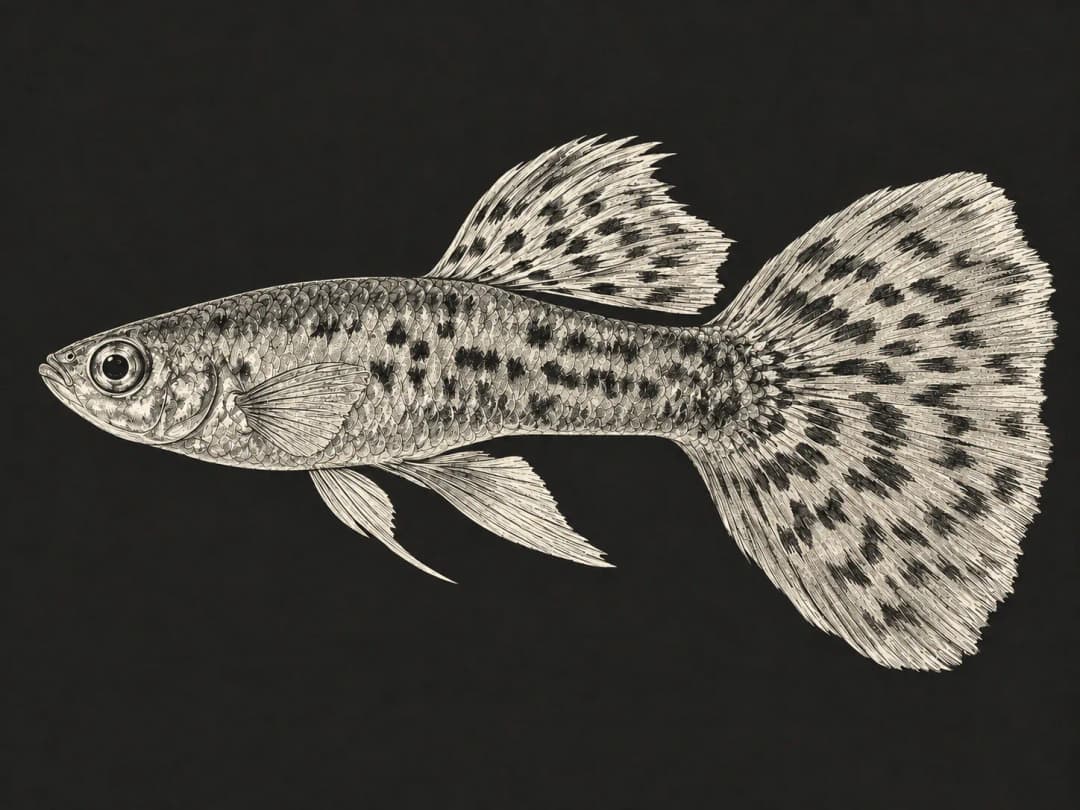
At each feeding, watch whether the fish eat eagerly and whether their breathing and swimming differ from usual. Record changes such as rubbing, clamped fins, white spots, fine dust, cottony growth, ulcers, abdominal swelling, raised scales or weight loss. Photos taken from the same angle help you compare whether lesions are growing.[1][2]
Avoid switching foods abruptly in large amounts or overfeeding. Feed enough to keep the fish in good body condition while avoiding leftover food that adds to the load on the quarantine tank. Refusing food is a common early sign of disease[3]; if it happens, test the water and look for sources of stress first, rather than trying to solve it by feeding more or repeatedly trying medications.
If there are symptoms, several fish die in succession, or the source raises concerns about a specific pathogen, a veterinarian can arrange skin, gill, fecal or other sampling. Routine home quarantine doesn't require you to do invasive sampling yourself, and the fixed sampling procedures of professional facilities aren't a must-do checklist for every owner.
When can fish join the main tank after quarantine?
Before moving fish, confirm the full quarantine record, that there are no unexplained symptoms, that water quality is stable, and that the new and existing fish are compatible in size, behavior and environment. If the fish have been ill or treated, a veterinarian should assess how long follow-up observation should last; don't release them just because 30 days have passed since the original arrival date.
Mycobacteria currently can't be detected with nonlethal testing, many viruses are also pathogens that quarantine can't easily screen out, some viruses may be carried by healthy-looking fish, and test results may also come back negative. So a normal appetite, normal appearance and a completed quarantine only lower the risk; they can't prove the fish are free of pathogens.[1][3]
For valuable fish or important broodstock, professional facilities sometimes keep a few new fish with existing fish in a separate system for one to two weeks after initial quarantine to watch for disease transmission. This sentinel fish approach involves exposure in both directions and is an advanced measure that requires professional assessment, not a standard step in home quarantine; the absence of illness doesn't rule out every infection.[2]
Basic principles for disinfection and medication
Remove organic matter first, then disinfect appropriately; rinse off or neutralize disinfectant residue as the product requires. Drying can lower the risk from some pathogens, but pathogens differ in their resistance, so don't assume that drying things in the sun takes care of every problem.[3]
Cleaning and disinfection may also destroy the nitrifying capacity of the filter media. Before preparing for the next batch of fish, re-establish or set up mature filtration and then check the water quality; disinfected but immature media can't be treated as a biological filter that's ready to use at any time.[1]
New fish don't all need to go through a round of medication first. Whether to give preventive treatment should be decided by a veterinarian based on the source, species and confirmed risks; if medication is needed, use a legally registered veterinary drug that's appropriate for the case, following the label and your veterinarian's instructions.
Frequently asked questions
Does using an isolation box inside the main tank count as quarantine?
If it shares tank water, it can't achieve the isolation needed to stop waterborne pathogens from spreading. Quarantine requires a separate body of water and dedicated equipment.[1][3]
The fish store says the fish have been there a long time. Do I still need to quarantine them?
Source and husbandry records help assess risk, but they can't replace isolation in your own system. New and existing fish may also each carry pathogens the other group has never been exposed to.[2]
If I'm quarantining only one fish, do I still need to send in several?
There's no need to sacrifice fish just to make up the numbers. First consult the clinic or diagnostic lab, and arrange testing according to whether it's an individual pet or a group disease situation; for preparing a submission, see "What to Do When Your Fish Is Sick".
Further reading
- What to Do When Your Fish Is Sick – Reading Aquarium Fish Symptoms and What to Do First
- Ammonia and Nitrite Poisoning – Fish Gasping at the Surface and How to Read Water Test Kits
- White Spot Disease (Ich) in Freshwater Fish – The Ichthyophthirius Life Cycle and Why It Keeps Coming Back
- Causes of Dropsy and Raised Scales in Fish – How to Assess a Swollen Belly and Pinecone Scales
References
- Petty BD, Francis-Floyd R, Yanong RPE. Management of Aquarium Fish. Merck Veterinary Manual, revised 2022.
- Yanong RPE. Fish Health Management Considerations in Recirculating Aquaculture Systems—Part 3: General Recommendations and Problem-Solving Approaches. UF/IFAS, FA101, 2003 (revised 2025).
- Yanong RPE, Erlacher-Reid C. Biosecurity in Aquaculture Part 1 An Overview. SRAC Publication 4707, 2012.
- Watson CA, Kilgore KH, Martinez CV. Shipping Fish in Boxes. SRAC Publication 3903, 2010.
- Francis-Floyd R, Yanong RPE, Pouder DB. Ichthyophthirius multifiliis (White Spot) Infections in Fish. UF/IFAS, CIR920/FA006, 1991 (revised 2026).