If you see a fish trailing white strings of feces or its belly gradually sinking in, first record what it actually eats and its body condition, then check the water. White feces can be seen with some intestinal parasite infections, but the color alone can't confirm the pathogen; ongoing weight loss also needs to be assessed together with feeding, competition for food and other diseases.[1][2][3]
Record white feces and weight loss separately
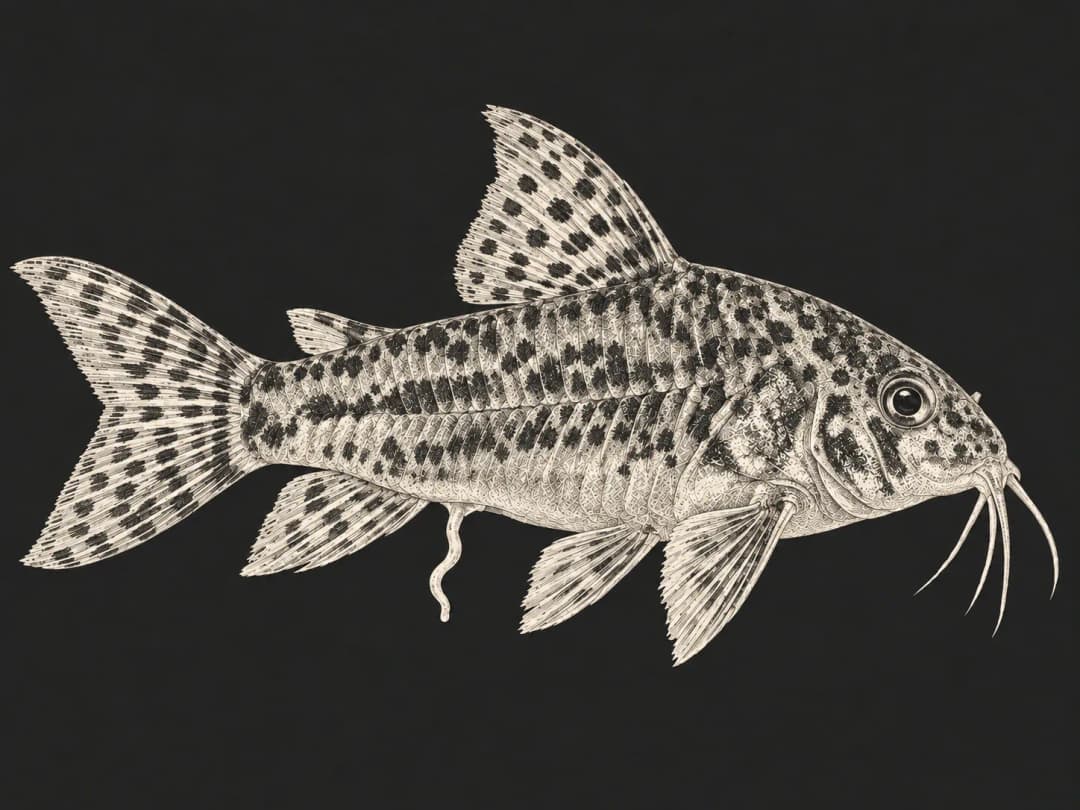
"White feces" describes what is passed, while "wasting" means a gradual loss of body tissue. Recording how often the strings appear and for how long, and photographing the belly and back from a fixed angle, makes changes easier to track. Don't treat a single bowel movement or a change in shape after spawning as chronic disease.
Seeing a fish chase food doesn't mean it's eating enough. At feeding time, check fish by fish whether each one swallows, keeps spitting food out or gets blocked by tankmates. For bottom-dwelling fish, also make sure food actually reaches the area where they forage, rather than just feeding the whole tank more.
These records help with assessment; if a fish keeps losing weight, becomes less lively or deaths increase, send samples for testing rather than waiting until the fish stops eating completely.[3][4]
Clues to internal parasites
| What you see | Directions to consider | How to confirm |
|---|---|---|
| White stringy feces with lethargy and weight loss | Intestinal protozoan infection and other causes | Have a professional examine fresh samples. |
| Still eating but steadily losing weight | Intestinal nematodes or other absorption and health problems | Combine body condition records with pathology testing. |
| Red worms protruding from the vent | Possibly Camallanus nematodes | Have a professional identify them so they aren't confused with other vent problems. |
| Long-term wasting with ulcers or spinal deformity | Needs a broader differential diagnosis for chronic disease[1] | A veterinarian arranges appropriate tests. |
Intestinal flagellates such as Spironucleus can be accompanied by weight loss, and Capillaria nematodes can also affect the growth of aquarium fish. Different groups have different life cycles, so medication should be chosen after the pathogen is confirmed; a single treatment can't cover every problem.[1][2]
With Camallanus infection, red worms can sometimes be seen protruding from the vent.[2] Their appearance still needs professional identification; don't pull at anything protruding from the vent with tweezers, as this can damage tissue. Some nematodes need an intermediate host while other species have a direct life cycle, so the risk from live food and spread within the tank should be assessed by pathogen.[2]
Check water quality and feeding too
Test temperature, pH, ammonia and nitrite, and check the filter and any recent changes. Stress from poor water quality, transport or crowding can occur alongside infection, and sick fish also often eat less.[1][3]
Check that the food suits the species' diet, mouth size and where it feeds, and check how it's stored, how long it's been open and whether it has absorbed moisture. If competition for food is confirmed, change where you feed or feed in separate zones, then watch individual fish eat. Once ongoing weight loss has set in, switching foods can't be the only response.[1][3]
Until the cause is clear, suddenly feeding much more to "fatten the fish up" isn't recommended. Record what is actually swallowed, leftovers and water quality together so any adjustment has a basis.
Confirm the cause before arranging treatment
Discuss sample requirements with the diagnostic lab. Freshly passed feces can sometimes provide clues, but whether a fecal exam, an examination of the sick fish or tissue testing is needed depends on the suspected pathogen.[2][4] A single negative sample doesn't automatically rule out infection.
Refusing food and competition for food affect how much treatment a fish actually receives; a fish that has stopped eating can't be assumed to still get enough. How to treat and medicate should be assessed by a veterinarian based on the cause and the fish's condition.
If parasites are confirmed, tankmates, quarantine, waste on the bottom and possible sources of spread also need to be considered. Treating only the thinnest-looking fish may not stop reinfection.[2]
Frequently asked questions
Does white poop always mean flagellates?
No. White stringy feces can be a clue to some intestinal infections, but the pathogen still has to be confirmed by testing, and medication can't be chosen from the color.[1]
If the fish seems to eat well, does it not need a vet?
If the fish's body condition keeps getting worse, it still needs to be checked. Some nematode infections can cause weight loss while the fish is still eating, so a normal appetite doesn't rule out a cause.[2]
Are hole-in-the-head and white poop always from the same cause?
You can't simply lump them together. Erosion on the head and intestinal signs should each be assessed, and samples can be submitted together if needed.
Further reading
- What to Do When Your Fish Is Sick – Reading Aquarium Fish Symptoms and What to Do First
- How to Quarantine New Fish – Isolating for at Least 30 Days and Acclimating Fish to the Tank
- What Causes Hole-in-the-Head Disease – The Evidence on Activated Carbon, Flagellates and Nutrition
- What Is Fish TB – Mycobacterial Infection in Aquarium Fish and Everyday Precautions
References
- Francis-Floyd R, Petty BD. Disorders and Diseases of Fish. Merck Veterinary Manual, revised 2020.
- Yanong RPE. Nematode (Roundworm) Infections in Fish. UF/IFAS, FA091, 2002 (revised 2006).
- Francis-Floyd R, Stilwell NK, Yanong RPE. Introduction to Fish Health Management. UF/IFAS, CIR921/FA004, 1990 (revised 2025).
- Stilwell NK, Yanong RPE, Francis-Floyd R. Submission of Fish for Diagnostic Evaluation. UF/IFAS, FA055, 2001 (revised 2025).