When a fish's fins are eroding, its gills are damaged or cottony lesions appear on its mouth, columnaris is an important differential. It's a bacterial disease that can look similar to water mold, and mixed infections are possible; "white fuzz on the mouth" alone can't decide how it should be treated.[1][4]
When to see a veterinarian promptly
If gill lesions come with rapid breathing, lesions grow noticeably within a day or two, several fish fall ill at once, or fish begin to die, contact an aquarium fish veterinarian as soon as possible. Columnaris can worsen quickly, so don't wait until obvious lesions cover the whole body before acting.[1][2]
Also check water temperature, ammonia, nitrite and aeration, and note any recent netting, transport, new fish or medications. Improving the environment helps reduce stress, but once fish are infected, the pathogen and treatment plan still need to be worked out.
What symptoms columnaris causes
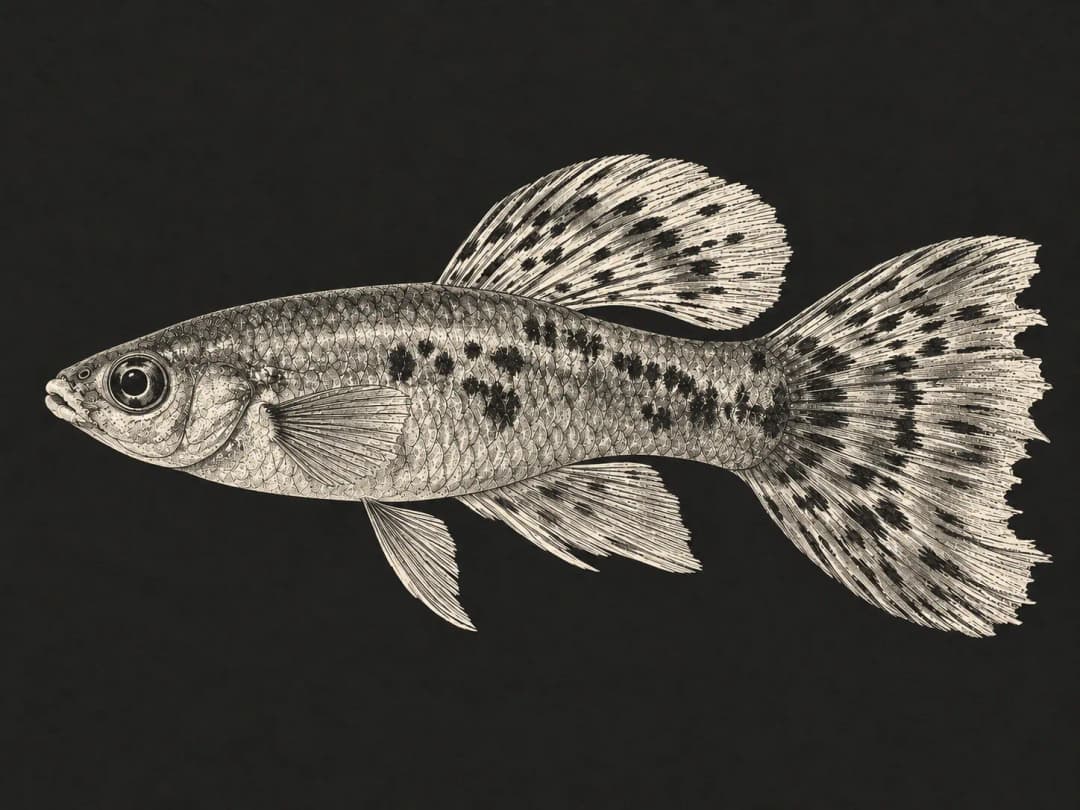
Lesions mainly occur on the skin, fins, gills and mouth. Early on there may be only a local loss of color, followed by erosion, tissue necrosis and bleeding. Grayish-white lesions on the back or near the dorsal fin sometimes form a saddle-shaped patch; the mouth may also have yellowish-brown, mucus-like material on it.[1][6]
The gills may have white, yellow to brown areas of necrosis, and in severe cases the tissue is destroyed. Young fish can develop acute gill disease; the course varies greatly among fish species and bacterial strains, and there's no fixed sequence of signs that every case follows.[1][6]
The pathogen has been reclassified into four species
Earlier literature often referred to the columnaris bacteria collectively as Flavobacterium columnare. A 2022 taxonomic study divided the group into F. columnare, F. covae, F. davisii and F. oreochromis, all four of which are associated with columnaris disease.[3]
As a result, F. columnare in older literature may refer to the broader group. This update helps in interpreting research findings, but owners don't need to work out the species from appearance; fish species, strains and the environment all affect the course of disease.
How to tell columnaris from water mold
| Item | Columnaris | Water mold disease |
|---|---|---|
| Main pathogen | Flavobacterium-related bacteria | Saprolegnia and other oomycetes |
| Common appearance | Grayish-white to yellowish-brown lesions, saddle-shaped patches, mouth erosion or mucus-like bacterial mats | Grayish-white, cottony, filamentous growth |
| Microscopic clues | Long, slender rods that may stack into columns or "haystacks" | Broad hyphae, usually without septa |
| Key limitation | Microscopy can give a presumptive diagnosis; culture or molecular testing may still be needed | Appearance can't rule out other growths or mixed infection |
Table compiled from columnaris and parasitic disease references.[1][2][4] The same fish may first have a bacterial wound that is then colonized by water mold; telling apart the color of the fuzz doesn't rule either one out.
Warm water and poor water quality are triggers, not a diagnosis on their own
High temperature, low dissolved oxygen, high ammonia or nitrite, crowding and handling injuries are common stressors cited in columnaris resources.[6] Some strains multiply more readily in warm water, but the optimal temperature for growing the bacteria in the lab can't be treated as a fixed disease threshold for aquarium fish.[1] The Merck manual also notes that the water quality conditions that make susceptible fish more vulnerable to highly virulent strains are still not fully understood.[2]
Improvements you can make at home include controlling feeding and leftover food, maintaining adequate filtration and aeration, reducing crowding and cutting down on unnecessary netting. The fish's mucus and skin are important barriers, and rough handling increases the risk of damage.
If you were considering adjusting the water temperature because of another disease, talk to your veterinarian first and aim to keep the temperature stable; columnaris occurs mostly in warm water, so don't apply the same treatment to every cottony lesion.[1][6]
Why culture and professional treatment are needed
Wet mounts of the skin, fins or gills can provide presumptive clues for columnaris; further confirmation may require suitable culture conditions and methods such as PCR.[1][2] When antibacterial treatment is needed, the veterinarian decides based on the clinical picture, culture and susceptibility data, rather than trying one drug after another.[5]
Underdosing antibiotics, treatment courses that are too short and frequent switching can all increase resistance and make diagnosis harder. When the situation is urgent, have a veterinarian assess and treat the fish right away; don't simply wait on your own for every test to come back, and don't choose a drug yourself.[5]
Frequently asked questions
Is fin rot always columnaris?
No. Fin damage can have many causes, including other bacterial infections, injuries and poor water quality; history and examination are needed to back up a diagnosis.
Will improving water quality always cure it?
Improving water quality is a necessary supportive measure, but infections and tissue damage that have already developed may still need professional care.
If medication is needed, use a legally registered veterinary drug that's appropriate for the case, following the label and your veterinarian's instructions.
Further reading
- What to Do When Your Fish Is Sick – Reading Aquarium Fish Symptoms and What to Do First
- Ammonia and Nitrite Poisoning – Fish Gasping at the Surface and How to Read Water Test Kits
- How to Quarantine New Fish – Isolating for at Least 30 Days and Acclimating Fish to the Tank
- Is White Fuzz on Your Fish Water Mold? – Wound Infections and Why Fish Eggs Grow Fuzz
References
- Declercq AM et al. Columnaris disease in fish a review with emphasis on bacterium-host interactions. Veterinary Research 44, 27, 2013. doi:10.1186/1297-9716-44-27.
- Petty BD, Francis-Floyd R, Yanong RPE. Bacterial Diseases of Fish. Merck Veterinary Manual, revised 2022.
- LaFrentz BR et al. The fish pathogen Flavobacterium columnare represents four distinct species. Systematic and Applied Microbiology 45, 126293, 2022. doi:10.1016/j.syapm.2021.126293.
- Petty BD, Francis-Floyd R, Yanong RPE. Parasitic Diseases of Fish. Merck Veterinary Manual, revised 2022.
- Yanong RPE. Use of Antibiotics in Ornamental Fish Aquaculture. UF/IFAS, FA084, 2003 (revised 2025).
- Durborow RM, Thune RL, Hawke JP, Camus AC. Columnaris Disease A Bacterial Infection Caused by Flavobacterium columnare. SRAC Publication 479, 1998.