
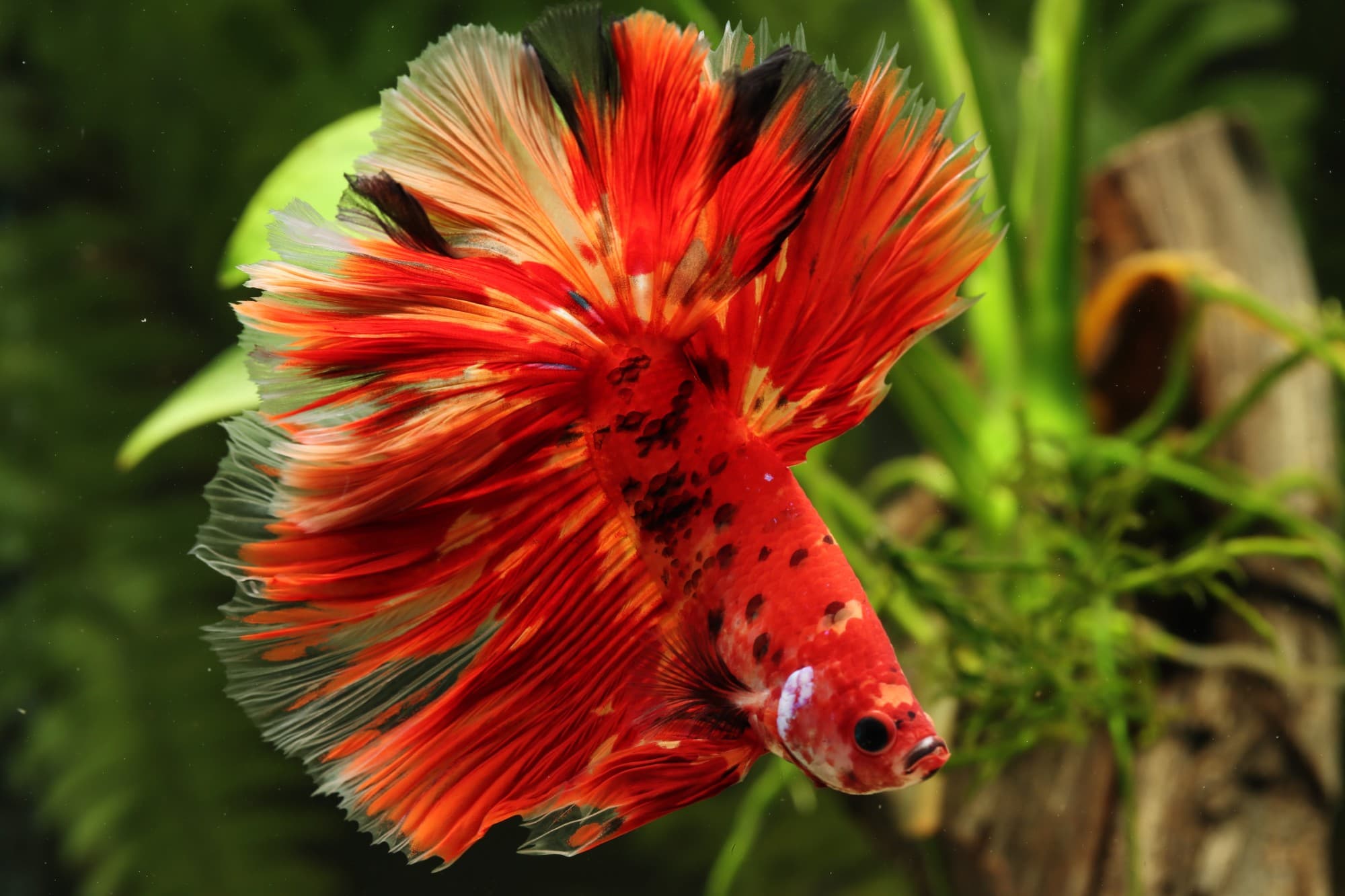
Bettas can come to the surface to breathe air, but that doesn't remove their need for clean water, room to swim and a stable temperature. The goal of long-term care is to let them explore, forage and rest, not just survive. This guide focuses on the common domestic betta, Betta splendens; other wild betta species need their own species-specific research.[1][2]
Betta care conditions and equipment
| Item | Key points |
|---|---|
| Tank | Plan 20 liters or more for a single fish, for more stable water quality and room for normal activity.[1][2] |
| Water temperature | 24 to 26°C works as a stable everyday reference.[1] |
| pH | 6.5 to 7.5 is a reference for typical domestic strains; adjust slowly and keep it stable.[1] |
| Filtration | Established biological filtration, with gentle flow and some surface movement. |
| Cover | Safe plants, smooth hiding places and resting spots near the surface. |
| Feeding | Start healthy adults on 1 small meal a day; the daily total can be split into 2 meals. |
A betta tank needs gentle flow and places to rest
Choose a rectangular tank where possible, with an adjustable-flow filter and a thermostatic heater; long-finned fish in particular shouldn't be pushed around by the current all the time. Plants and smooth cover give room to explore and retreat. Near the surface, add leaves or rests that can support the fish's body, and avoid sharp corners, rough edges and small holes the fish could get stuck in.[2]
Add a lid to prevent jumping, but leave an air gap between the water surface and the lid, and don't let floating plants cover the whole surface. Use lights on a timer to set a regular day-night rhythm. If reflections on the glass keep the fish flaring, ramming or hiding, adjust the lighting and background rather than using a mirror to stimulate it over long periods.[1][2]
A study comparing tank size and furnishing in 13 male bettas found that activity and abnormal behavior were better in a 19.3-liter furnished tank than in smaller tanks or a bare tank of the same volume. This supports adding space and environmental enrichment, but it doesn't prove that any particular volume guarantees every fish will be healthy. Another study also notes that even a large tank can't guarantee two males will live together peacefully, so keeping one betta per tank is easier to manage at home.[3][4]
Betta portions can't be judged by pellet count alone
Start healthy adults on one small meal a day of a dedicated staple. If you split it into morning and evening meals, divide the existing daily total in two, and adjust according to body condition, activity and water quality. Growing juveniles can have smaller, more frequent meals, but don't carry over the adult pellet count. Pellets differ in diameter, weight and energy, so "5 pellets a day" can't be a standard for every brand and every betta.[1][5]
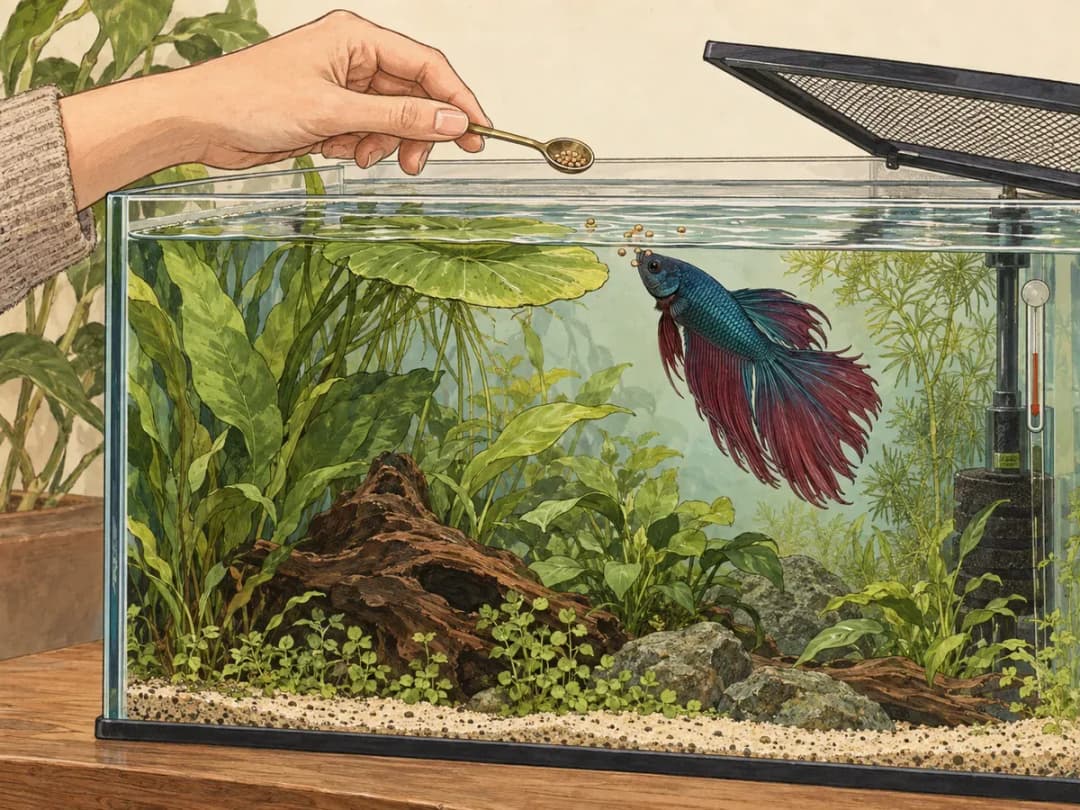
When first using pellets, drop in a small amount at a time and make sure your betta really swallows them rather than repeatedly taking them in and spitting them out. Use about 1 to 2 minutes of feeding observation to set a first small portion, note the pellet count or weight for that brand and size, then stop adding food and remove anything uneaten. If the belly is noticeably more swollen than usual, appetite drops the next day or there are leftovers, recheck the portion; if the fish keeps getting thinner, don't conclude it is getting enough just because there are no leftovers.
Small amounts of frozen foods from a trusted source and handled properly, such as brine shrimp or daphnia, can replace part of the staple; the daily total still needs to be controlled. Don't use bloodworms alone or freeze-dried foods as a long-term substitute for a complete staple, and wild-caught live foods also raise the risk of bringing in pathogens.[1][5]
How to choose a dedicated betta food
This product's floating pellets suit the betta's usual habit of feeding at the surface. Before using it, check whether the roughly 1.5 mm pellets suit your fish's mouth; if the fish keeps spitting them out or can't swallow them, change the pellet size or form of food rather than simply feeding more. A food your betta can eat and that helps it keep its body condition over time is what matters most when choosing.[6][5]
Betta water changes and filter maintenance
Every day, check water temperature, breathing, fins and feeding, and make sure the filter is running.
An established, lightly stocked tank can start with weekly partial water changes of 10 to 25%, increasing frequency and volume based on water test results. Small tanks usually need closer monitoring.[1]
The management target for ammonia and nitrite is undetectable; test more often with a new tank, after cleaning the filter or when something seems wrong.[2][7]
Treat top-up water for chlorine and chloramine first and bring it close to the tank's temperature; avoid replacing all the biological media at once.[8]
How to tell whether your betta is healthy
Learn where your betta normally swims and rests: lying briefly on a leaf can be rest, but staying on its side, listlessness or being unable to rise to the surface needs attention. Watch for new notches along the fin edges, wounds on the body, faster gill movement and sudden changes in feeding. If it keeps gasping, loses balance, has raised scales or is clearly weak, test the water first, check oxygen, temperature and filtration, and contact a fish veterinarian as soon as possible.[1][2]
A bubble nest at the surface is a behavioral clue, but whether there is one can't on its own tell you if your betta is healthy; color changes also need to be read together with breathing, body condition and appetite. Recording when you feed, change water and adjust equipment makes it easier to see whether a change is related to how the tank is managed.
Betta care FAQ
Bettas can breathe air, so do they still need a filter?
It still does. The labyrinth organ helps it breathe, but it can't remove the pollution produced by waste.[2]
Can two male bettas share a large tank?
Not recommended. Research shows that extra space can't guarantee there will be no aggression, so at home they should be kept apart.[4]
Can bettas live with guppies?
You need to consider territorial behavior, injuries to long fins and water-quality needs. Beginners shouldn't make this kind of community setup their default; establish a stable solo setup first.[1]
Further reading
References
- RSPCA Australia: betta care
- OATA: betta care
- Clark Shen et al. 2024 Life beyond a jar
- Oldfield and Murphy 2024 Life in a fishbowl
- UF IFAS Fish Nutrition
- Ultra Fresh BETTA PRO shrimp patties
- Merck Veterinary Manual: water quality testing and monitoring frequency
- OATA: freshwater aquarium setup and maintenance